
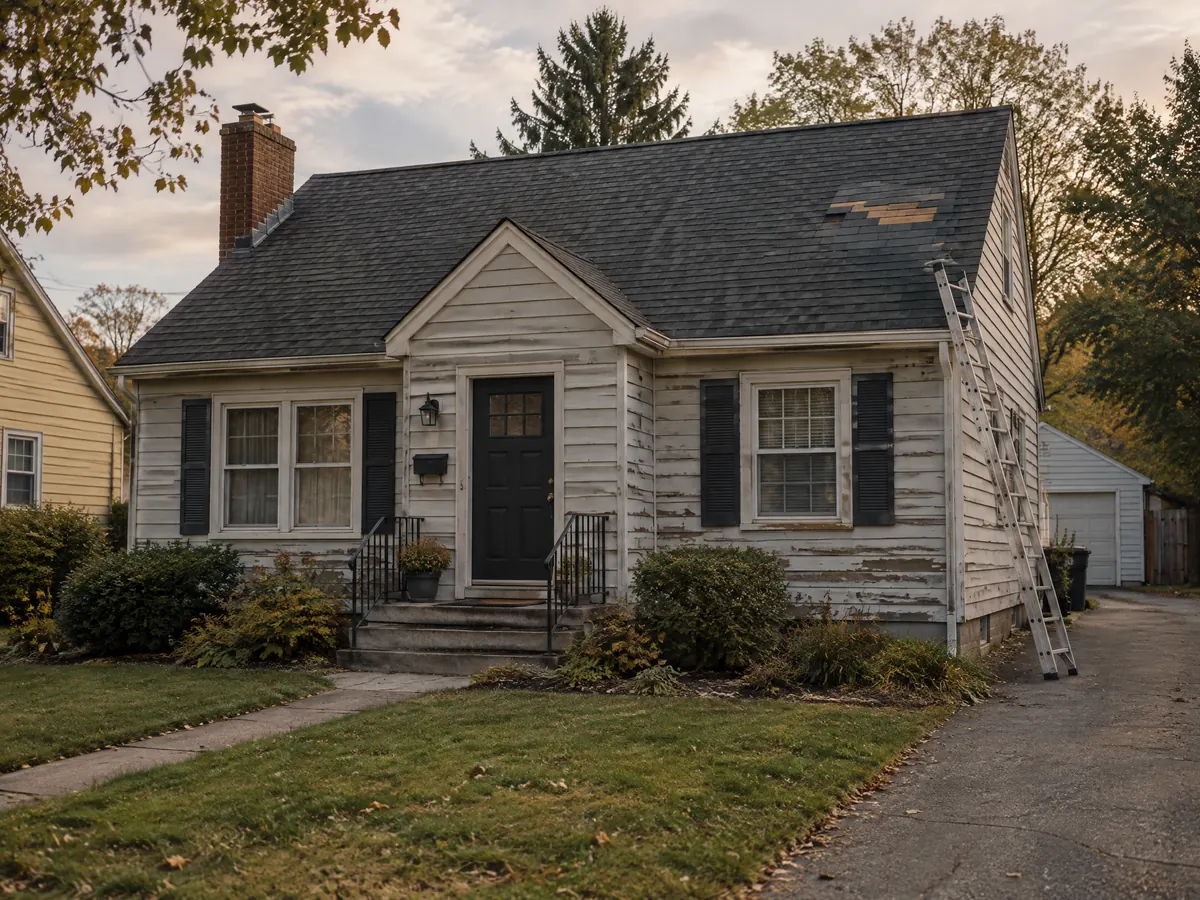
Built for owners staring at damage that got worse over winter, or a repair list that ballooned after heavy rain and thaw. If you are weighing claims, cash, or calling a contractor, you are in the right place.
The goal is to help you decide what to stabilize first this spring, what can wait, and when to repair, list, hold, rent, or sell as-is. Timing matters with school calendars, tax bills, and insurance renewals coming up in Q2.
Storm loss after winter: the first 72 hours
Start with safety. Shut off water if you see leaking pipes. Kill power to wet areas at the main panel if outlets or wiring got soaked. Keep people and pets away from sagging ceilings, fallen trees, or loose roofing.
Stop further damage fast. Tarp roof openings. Set out buckets, towels, and fans. If water intrusion is significant, call a mitigation company for extraction and drying within 24 to 48 hours to reduce mold risk. Keep receipts for all temporary work.
Document everything before clean-up if it is safe to do so. Take wide shots and close-ups of every affected area, plus serial numbers for appliances. Note the date and time of the event and weather details you observed. Save damaged materials until the adjuster sees them unless safety requires disposal.
Scope control so the project does not sprawl
Write a simple scope on one page before you call for bids. Separate must-do items that stop further loss or fix code hazards from nice-to-have upgrades. Example: replace 20 shingles at the rear slope and reflash chimney, not re-roof entire house, unless the roof is at end of life.
Ask for apples-to-apples estimates. Give each contractor the same written scope and request a line-item bid with quantities, materials, labor, and exclusions. Ask for a change order policy, an allowance for hidden conditions, and a timeline with lead times for parts.
Protect yourself on paperwork. Request a copy of the contractor’s license and insurance. Ask for a preliminary schedule of values so you only pay for work in place. Plan a 10 to 15 percent contingency for surprises, and require signed lien releases with each draw.
Claims timing and paperwork that trip people up
Policies usually require quick notice of loss. Call the insurer’s claims line and ask about your deadlines for reporting, mitigation, and submitting a proof of loss. Deadlines and proof requirements vary by state and carrier, so write down names, dates, and instructions given.
Understand how money flows. Some policies pay actual cash value first, then release depreciation after repairs are complete. If there is a mortgage, the claim check may be made out to you and the lender, and the lender may need to inspect progress before releasing funds.
Do not wait on insurance to stop urgent damage. Mitigation is typically covered when reasonable and necessary. If your estimate misses hidden problems, ask the adjuster about a supplemental claim. Keep every invoice and photo. If you hit delays, ask in writing for extensions and save the reply.
Repair triage: what to stabilize first this spring
Fix what prevents more loss. Roof leaks, broken windows, failed flashing, and active plumbing leaks come first. Next are electrical hazards like scorched breakers or wet panels. Interior finishes can wait until the structure is dry and sound.
Water is the clock. Aim to extract standing water immediately and dry within 24 to 72 hours using air movement and dehumidifiers. Cut out saturated drywall below the water line if needed. Treat framing and subfloors once they are dry, then rebuild. If you smell musty odors or see visible mold, consider a professional assessment.
Think about livability versus speed. A non-working HVAC in mild spring weather may be okay for a few weeks, but a failed water heater or unsafe staircase is immediate. If you must move out, check your policy for loss-of-use coverage and confirm the daily limits and required receipts.
Repair, list, hold, rent, or sell as-is: choosing a path
Repair and keep is a fit when damage is contained, you have time to manage contractors, and the numbers work after deductibles and contingencies. List after repairs if you want top presentation and can wait for completion plus buyer timelines. Listing as-is may work if you disclose damage fully and price for condition, but expect lender or buyer repair conditions in some cases.
Hold or rent can make sense when safety repairs are done, cash flow covers taxes, insurance, and maintenance, and you have a plan for future capital work. Refinancing or a line of credit may help fund repairs, subject to lender rules and appraisal. Consider seasonal factors like school-year moves, summer availability for contractors, and midyear insurance renewals when choosing timing.
A direct as-is sale can be practical if the scope is overwhelming, the claim is disputed or slow, the house is vacant, or deadlines are tight due to a tax bill, probate steps, or a relocation. Companies that buy directly, such as OC Acquisitions, typically accept current damage and unfinished claims, coordinate with your lender on claim checks, and aim for a clear closing timeline. Compare net outcomes, time, and stress across all options before you choose.
Q2 stabilization checklist for storm and repair season
- Pull your insurance policy and note claim, proof of loss, and repair deadlines on a calendar for April through June.
- Schedule two inspections this month, one roof or exterior and one plumbing or interior moisture check, and document with photos.
- Create a written one-page repair scope that separates must-do stabilization from optional upgrades, then request three line-item bids.
- Call your mortgage servicer to confirm claim check endorsement steps and inspection requirements before the first payment arrives.
- Set a 10 to 15 percent contingency in your repair budget and line up funds for deductibles, deposits, and materials with long lead times.
- Clear gutters, downspouts, and yard drains after spring storms, and look in the attic or crawlspace during the next rain for active leaks.
- Confirm property tax due dates and insurance renewal month, then decide whether to repair, list, hold, rent, or pursue a direct as-is sale.
Common questions
Should I file a claim or pay out of pocket for minor damage?
Estimate the total cost, including any hidden work, and compare it to your deductible and potential surcharge risk. If repairs are only slightly above the deductible and you can afford them, paying cash may be simpler. For larger losses or anything that could worsen, reporting promptly is usually safer.
How long do I have to complete repairs after getting insurance funds?
Policies and lenders set different timelines, and some require work to be finished before depreciation is released. Ask your adjuster and mortgage servicer for the specific dates and any extension process. Get confirmations in writing and keep progress photos and paid invoices.
Can I sell a house with unrepaired storm damage or an open claim?
Often yes, but you must disclose known defects and claim details. If there is a mortgage, the lender may need to endorse claim checks and approve how funds are handled at closing. Some buyers and direct home-buying companies will purchase as-is and coordinate open claims, while traditional buyers may require repairs for financing.
This article is general information, not legal, tax, or financial advice. Rules and timelines vary by state and by situation, so confirm specifics with a qualified professional before you act.